
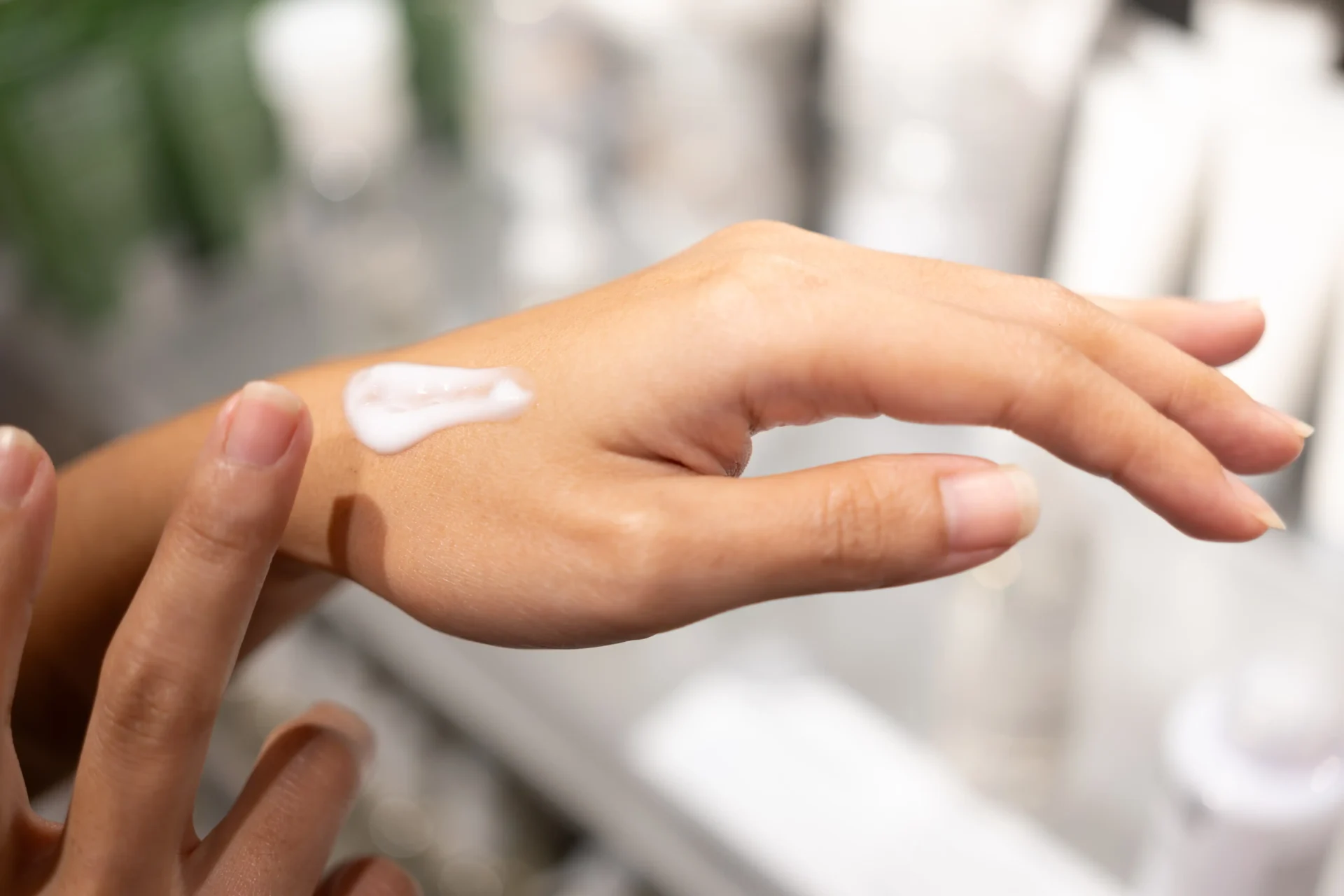
Ask most people what cannabis topicals do and you will get a fairly simple answer: rub it on sore muscles, feel something, move on with your day. That is part of it, but it only tells half the story. At AMCH, brands like Mary’s Medicinals, Escape Artists, and Care Division have built entire product lines around a much bigger idea: that how cannabis gets into your system matters just as much as what is in it.
Local Relief: What Standard Topicals Actually Do
A traditional cannabis topical, think a salve, lotion, or balm, works locally. It absorbs into the skin and interacts with cannabinoid receptors right there at the surface and in the tissue just below it. That is why so many people reach for one on a single spot: a bad shoulder, an achy knee, tight muscles after a long day or a hard workout.
Brands like Care Division and Escape Artists have built loyal followings by concentrating serious cannabinoid content into these formulas, well beyond what you find in a generic drugstore CBD cream. Many people say the higher the concentration, the more they notice, which is why they keep a tin in the gym bag or on the nightstand for the aches that come with everyday life.
Because these products stay local, they generally will not get you high. That makes topicals one of the most approachable ways to explore cannabis, especially for people who are curious about the plant but do not want any psychoactive effect at all.
Going Deeper: What Makes Transdermals Different
Transdermal products are a different category entirely, and this is where Mary’s Medicinals has built its name. Unlike a topical that stays at the surface, a transdermal patch is engineered to carry cannabinoids all the way through multiple layers of skin and into the bloodstream itself. Once cannabinoids cross that barrier, they circulate systemically, so the effect is not limited to the spot where you applied it. A single patch is designed to release steadily over an extended window, often up to 12 hours.
Mary’s Medicinals launched the first packaged transdermal THC patch back in 2013, and later secured a US patent for its transdermal cannabinoid technology in 2016, a rare feat for a cannabis company at the time. Their patches use a proprietary carrier compound built to help cannabinoids cross the skin barrier efficiently, something a basic lotion was never designed to do. That is a real difference in bioavailability, which is just a technical way of saying more of what you apply actually makes it in rather than sitting on the surface.
Why the Distinction Actually Matters
Here is the simplest way to think about it. If you have one specific spot in mind, a topical applied right there makes sense. But if you want something that works more broadly rather than in a single area, a transdermal patch is designed for that kind of all over, longer lasting coverage. It also bypasses the digestive system, so there is no waiting on an edible to metabolize and no guessing about dosage the way you sometimes get with inhalation.
Patches also suit people who want a steady, all day option without redosing constantly. Apply one in the morning on a spot with good blood flow, like the inside of the wrist, and let it work in the background while you go about your day.
Building the Right Routine
A lot of our customers end up using both: a concentrated salve like Care Division’s The Truth or an Escape Artists cream for that one stubborn spot, and a Mary’s Medicinals patch for broader, all day coverage. Used together, they cover both ends of what these products can offer, targeted and systemic, quick and long lasting.
None of this is medical advice. Topicals and transdermals affect everyone differently, and if you are managing a health condition or taking other medications, talk with your physician about what makes sense for you.
Stop by AMCH in Denver or Dumont and let our team walk you through whether a topical, a transdermal, or a combination of the two fits what you are looking for. It is one of the most underrated categories on our shelf, and it is worth exploring.